
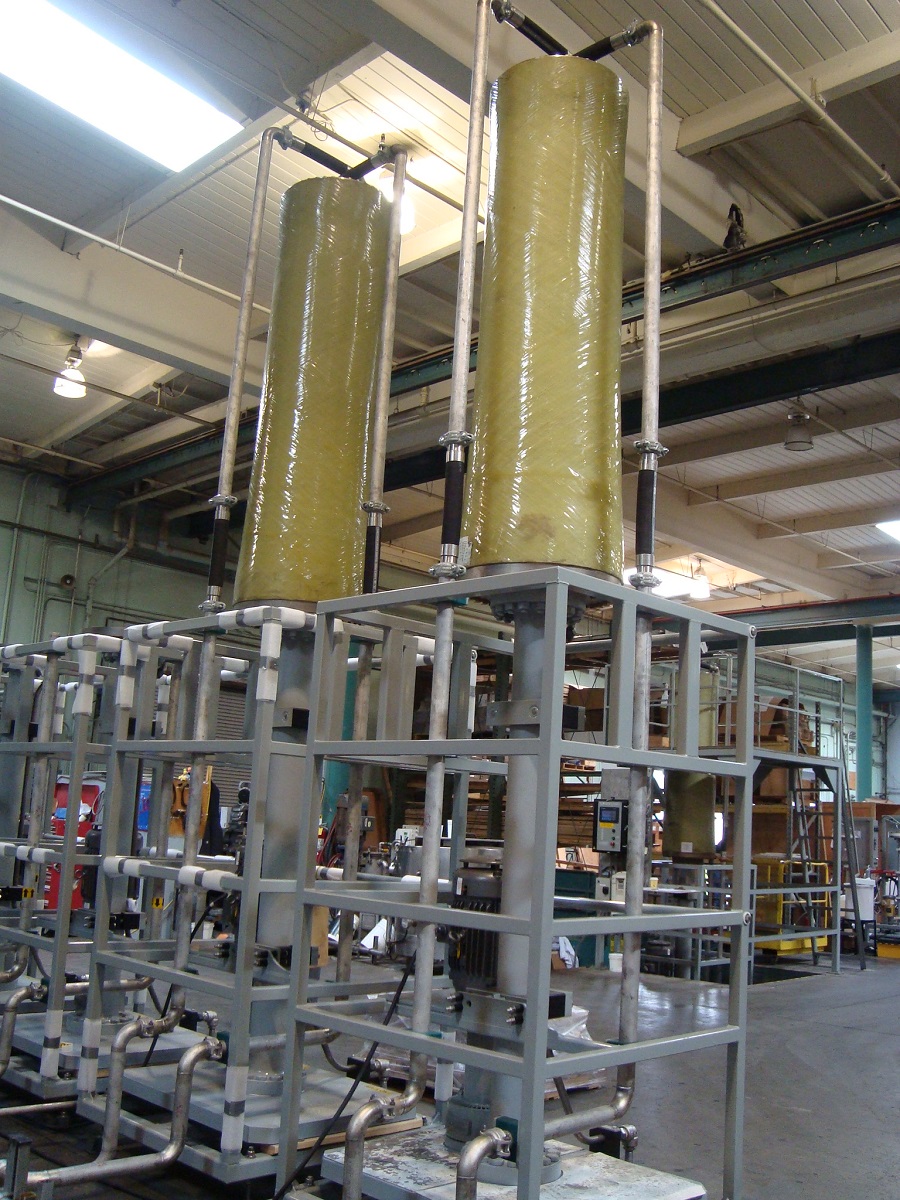
The invention of VSEP Membrane Filtration technology by Esmil partners (New Logic International, USA) dramatically increases filtration rates where this is important in an application. The application of intense resonating shear waves at the membrane surface rapidly sweeps excluded material from the surface thereby reducing fouling potential and increasing filtration rates by approximately tenfold.
This membrane filtration technology is particularly suited to applications where influent is high in suspended solids, providing effective treatment at a single pass. High throughput rates means advanced VSEP membrane filtration technology can potentially be used in place of a much larger area of conventional crossflow membranes; the small plant footprint means this technology can be installed even where space is tightly constrained. As with other membrane treatment technologies, VSEP membrane filtration technology can be applied to a range of treatment and product recovery applications.